
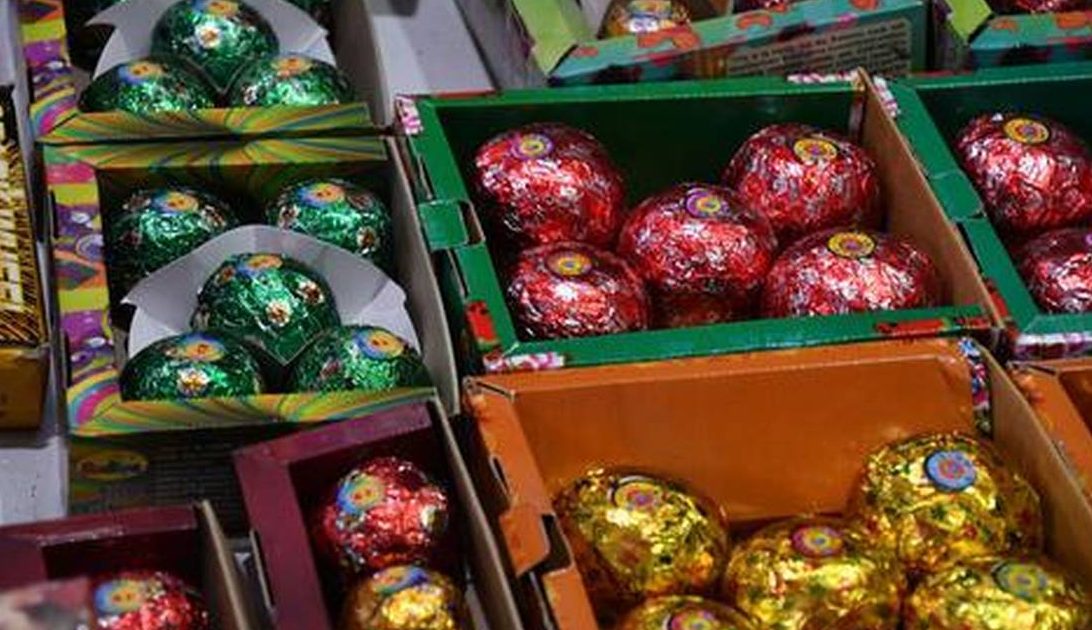
Are green crackers really safe? Are fireworks – that are plain visual delights and aren’t noisy – less harmful than those that are burst and produce noise and cause noise pollution?
While that is the prevalent notion, scientists have always been saying that fireworks are in no way less harmful. The West Bengal Pollution Control Board (WBPCB) also wants to ensure that the “green crackers” are completely safe too.
People generally prefer fireworks in an attempt to avoid firecrackers, which are not only being progressively banned over the years but also having their sound limits fixed by the courts. People caught bursting banned firecrackers are also duly penalised by law.
But there are no such laws in place for fireworks, which are deemed “harmless” by people. Earlier, in 2018, the Supreme Court had allowed bursting of green crackers, relaxing its earlier verdict of completely banning crackers in 2017.
The green crackers were suggested as a viable alternative by the National Green Tribunal. Green crackers are low emission crackers with small shell size and they release water vapour during emission. The water vapour so released traps the dust particles in emitted smoke thus bringing down particulate pollution in air by 30 per cent.
Green crackers also don’t use banned chemicals like barium nitrate, arsenic, lithium and lead, burning of which releases toxic pollutants. However, the state pollution control board wants to verify whether the green crackers are really “safe” as being claimed and also measure the extent of damage that the so called green crackers can cause to human body.
Read More: Cyclone Fani: Mamata Banerjee cancels her election campaign for two days
Green crackers used in the country are researched and developed by CSIR-NEERI (National Environmental Engineering Research Institute), is a constituent laboratory of CSIR (Council of Scientific & Industrial Research), funded by the Central government.
WBPCB will engage scientists or scientific consultancy providing organisation to examine green crackers and other fireworks and study the reports. Results from the reports will be made public the next year in order to raise awareness among people against the harmful effects of fireworks.
The board plans to gradually bring down the bursting of fireworks by making people aware and not by imposing a ban. An official said that last year the floating particulate matter per cubic metre in air during Kali Puja was 800 microgram, 1,700 microgram in Diwali and 1,200 microgram on the day of idol immersion. All the figures are alarmingly high from the prescribed level of 100 microgram per cubic metre which is considered tolerable. For several years now, the WBPCB is spreading awareness on the harmful effects of fireworks.