

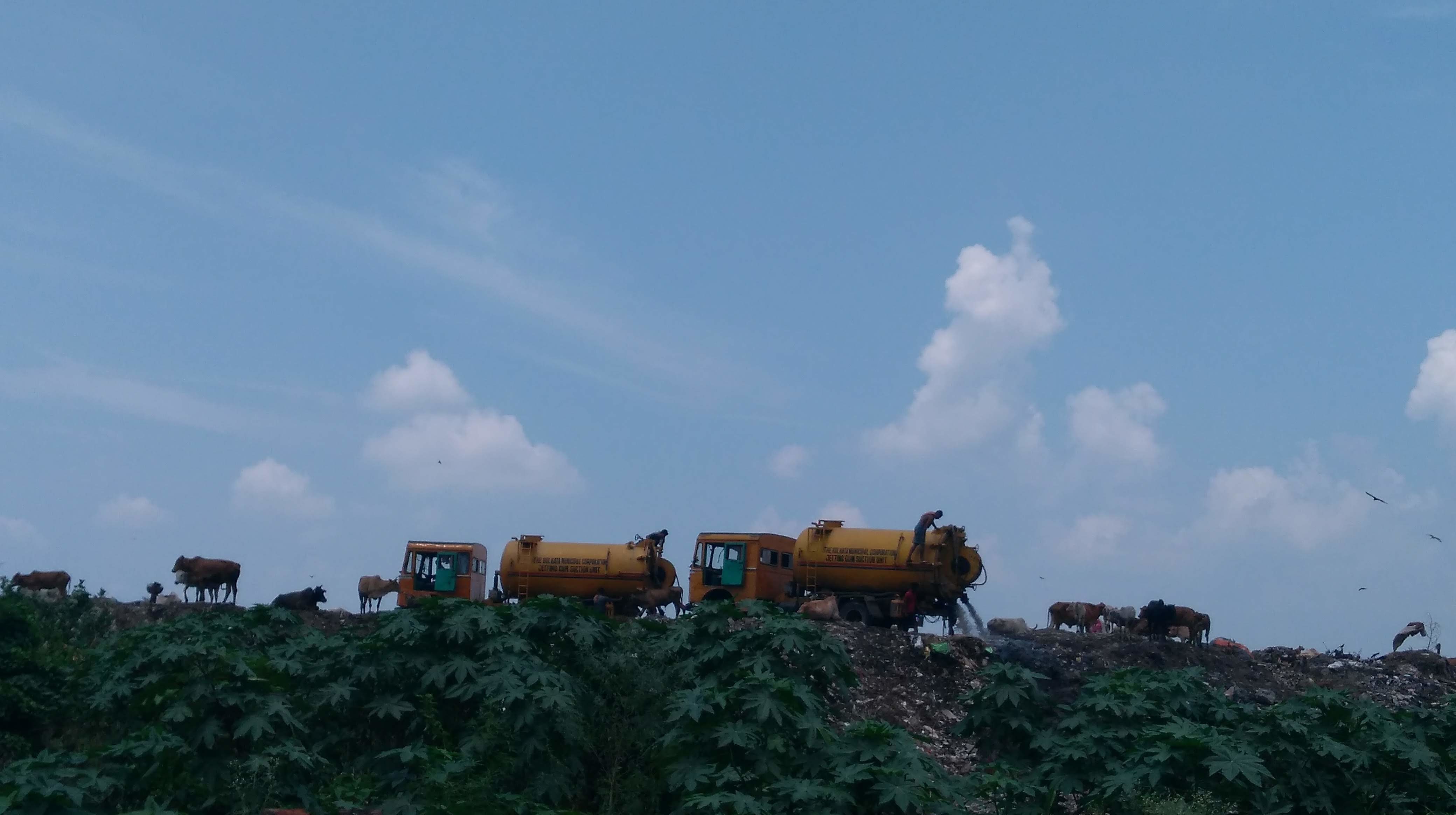
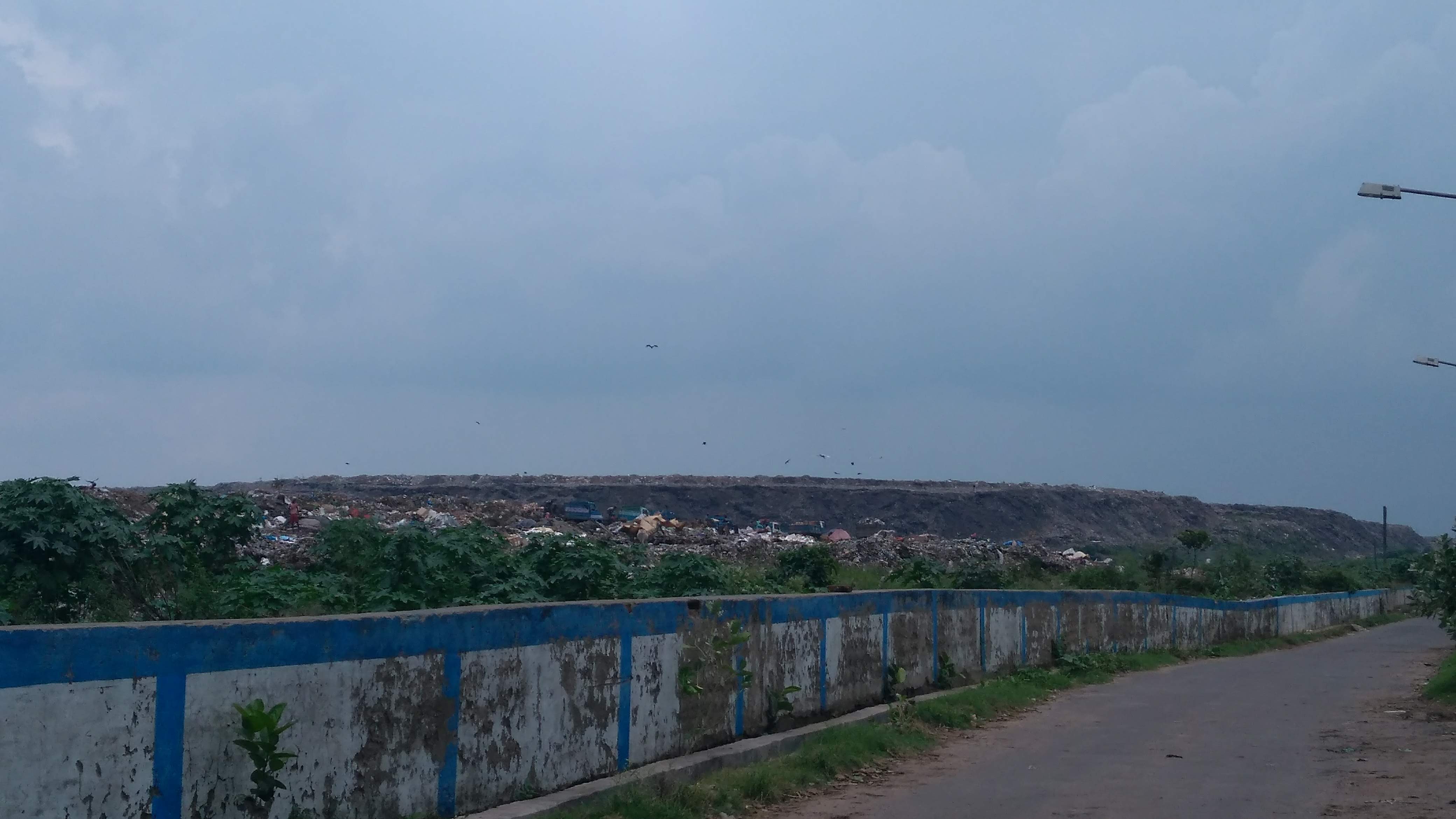
Dhapa dumping ground on the eastern fringes of Kolkata is struggling to cope with the huge burden of waste that has accumulated from the city through decades. Kolkata – where 4.48 million people live (the daytime population goes up to eight million) – contributes an average of 4,000 tonnes waste daily, amounting to 1.3 million tonnes annually to Dhapa. Imagine then the lives of the people living around the dumping ground who have been struggling to cope with the hazards of living in unhygienic surrounding for years!
Villages like Unchupota, Dhapa-Durgapur, Makaltala, Anantabadal and Khanaberia surrounding the dumpsite house over 30,000 people. The current dumping ground spreads over 35 hectares with a closed dump of 12.14 hectare and an active one of 23 hectare. Though both started operations in 1987, one was closed in 2009. The Kolkata Municipal Corporation (KMC) is planning to shut down the entire site within two to three years.
“We exist because of the garbage. Many people pick garbage and sell it to dealers. We do have a problem, but if the garbage is not there what shall we eat?” says Mourani Naskar, a resident of Durgapur.
Read More: Behala East: Trinamool names Ratna Chatterjee candidate, who will be BJP’s candidate?
A 2014 study “Dhapa Dumpsite Environmental and Social Assessment Report”, conducted by the West Bengal Pollution Control Board in association with a Denmark-based organisation, reveals the condition of the villages and the residents.
Lack of infrastructure
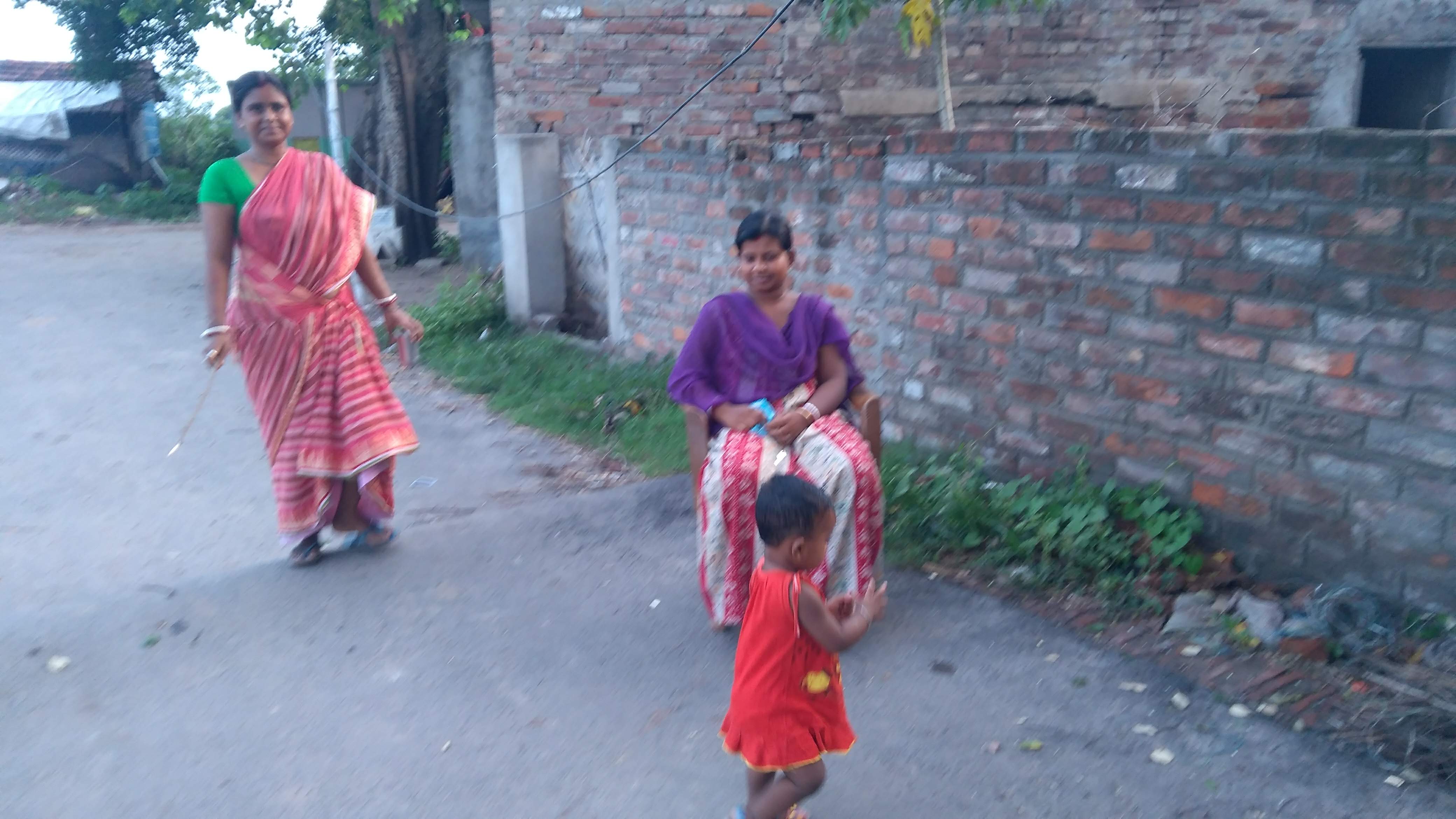
These villages lack basic infrastructures like proper sanitation facility, safe drinking water, proper communication or proper health care facilities. Biswanath Naskar, a shopkeeper adds, “There is no basic health facility nearby, we have to go to Sealdah or Beliaghata for treatment.”
The population has risen over the years as people migrated from distant places for jobs. The population increase has also led to rise in demand for available facilities to serve people. Basudeb Jana, who migrated from Durgapur a few years ago says, “I work as a labourer, where will I find a cheaper shelter?”
During monsoons, people fear that dirty water contaminates the water bodies. Sagar Mondal, a farmer says, “Once it rains heavily, the dirty water fills the ponds. Now drains have been built but we fear even that is not enough.” Residents depend on municipal water tankers for safe drinking water.
Farming and fishing are major occupations, and many work as rag-pickers and daily labourers. Few are in private companies or government services. The report shows that villages like Durgapur and Anantabadal, have poorer population than Makaltala, where the average income has risen, following the closure of the old site. According to the report, the villagers have to spend more on the basic facilities making them even poorer.
Unhygienic living condition
The fields and ponds are surrounded by piles of waste, or covered by layers of polythene. The air smells of the waste with the smoke coming out of the burnt waste. Sagar says, “There is a lot of pollution here. We know this place is unhygienic but we can not help it. We struggle to feed ourselves how can we think of shifting to another place?”
Sudarsan Sardar, a farmer in his mid-50s says, “I am seeing this since childhood. Trucks loaded with waste come from the city and dump it here. We stay surrounded with waste.” Garbage processing units have sprung up within the villages. Some residents collect garbage from the dump and sell it to these industries. The collected waste is burnt and processed in these units, leading to emission of smoke and odour. Smell and smoke coming from a crematorium and a bone factory near the closed dumpsite also pollute the air.
Sudarsan also points out that, apart from the smell the garbage processing units also cause pollution in the villages.

“There is also a crematorium nearby. They burn the unidentified dead bodies there. The smell and smoke that come out make our lives miserable. It is very harmful for children. So many of them are ill, even my daughter has respiratory problem,” says Jana.
Ranjit Sardar, another a farmer says, “Earlier they used to treat animal meat here only and that smelt so bad, many of could not eat at the time. My family members have fallen ill. But now that has stopped after a police crackdown.”
Health issues
The smell and smoke both lead to severe respiratory problems. Studies indicate that the air has high concentration of hazardous elements like methane and carbon-dioxide. Skin ailments are prevalent among those who collect waste. Water borne diseases are regular in these villages.
Rohit Mondal, a teenager says, “The smoke of burnt objects like leather causes respiratory problems and other illness, people visit hospitals regularly. So many people have died due to illness but these problems have never been solved.”
As water mixes with the waste, water borne diseases, like diarrhoea are prevalent. The area acts as a breeding ground for mosquitoes and diseases like malaria, dengue are common.
Biswanath says, “Everyday someone is taken to hospital. So many people die. But what can the civic body do do as they have no other place to dump the waste?”
Efforts by the Civic Body
The Kolkata Municipal Corporation has made efforts to reduce accumulation of waste by incentivising other ways of solid waste management. Work to convert the old site into a park started in 2016. The civic body plans to close down the entire site within two to three years, by introducing scientific ways to compost the waste.
However, moving the site to the other end of the ground has made life difficult for people like Jana. He says, “When I came here this part of the field was a farmland, but now they dump and burn the garbage just in front of our houses, this is having an impact on our health.”
Rohit also says, “We do hear that the corporation is trying to shut down the whole site. We are also told that once they complete the park these industries will be shutdown. But we have no idea when that will happen.”
Leave a Reply