

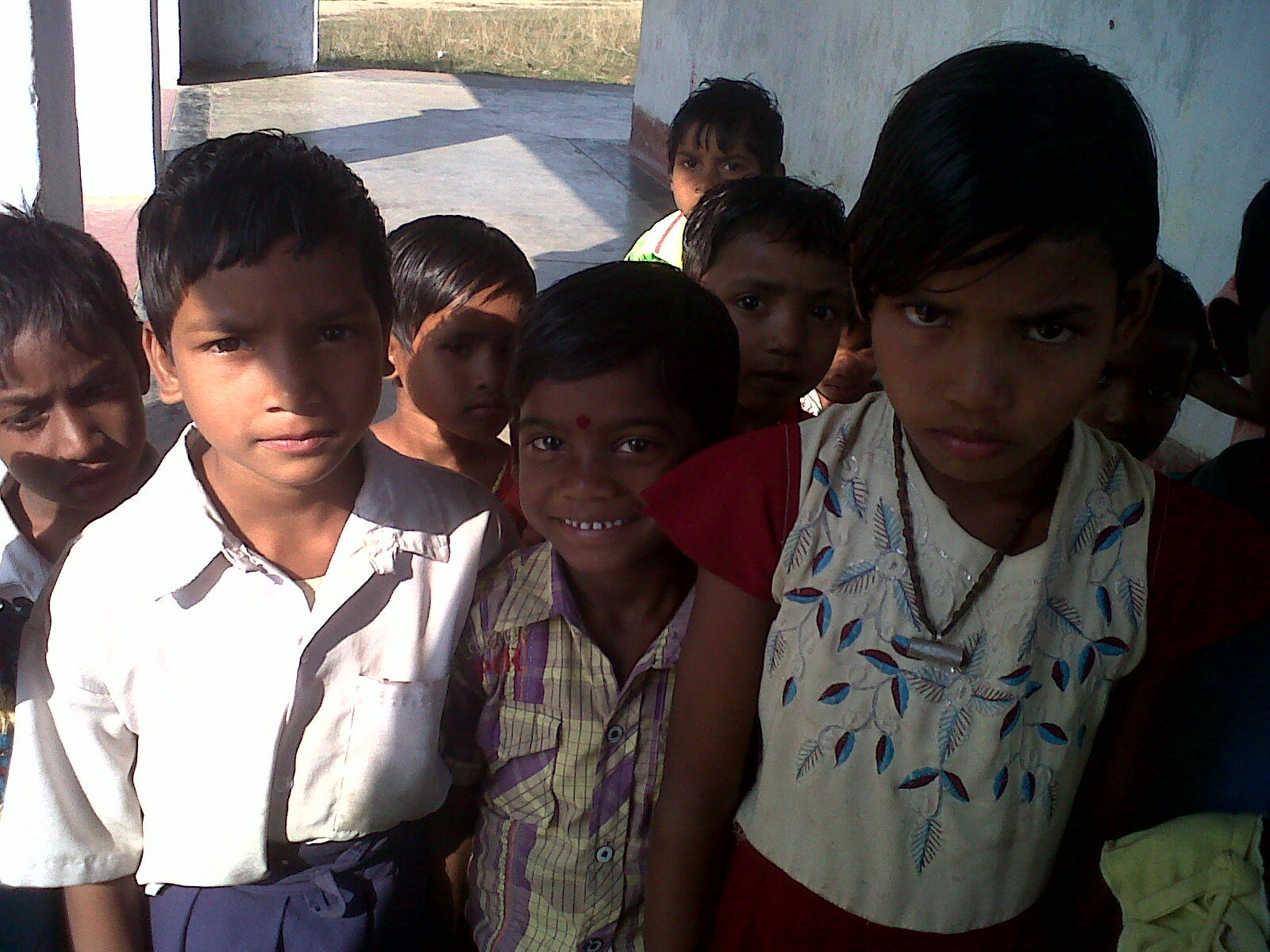
A report on “Primary Education in West Bengal: The Scope for Change”, was released in Kolkata on July 10 by Nobel Laureate Amartya Sen, chairperson of the Pratichi (India) Trust.
The report is a first-of-its kind study on public-run state schools in which the experiences of the schools – including teachers and students, parents and guardians – in association with academics and researchers has been compiled. The study has been coordinated by the Pratichi Institute.
The report, very significantly, mentions that “sizable sections of schoolteachers incur out-of-pocket expenditure to ensure that their school’s heart does not stop beating.”
Read More: Abhishek Banerjee files defamation case against Suvendu Adhikari
One of the conclusions drawn, among other things, is the need for more funds for the schools. Yes, it is difficult to get funds. Which leads to this observation in the report: “A call for more funding is often met with a counter-argument about the eternal fund crunch and the apparent inability of ‘squaring the circle’. But such impossibilities rarely surface when public resources are used for private profit – for instance, in the banking sector in the form of huge loans to known defaulters, or in the health sector in the form of public subsidies to private insurance companies. To put it differently, we need to rethink what is and is not possible. If politics is the art of the possible, then a decently functioning government school should fall within the realm of possibility.”
Sen, in the Foreword, says that “the progress of primary education in West Bengal gives us grounds for some satisfaction, but we cannot escape the diagnosis of a number of serious gaps, telling us about additional things that have to be done… policy reforms and attitudinal developments are closely related. We need both.”
Read More: BJP candidate Soumitra Kha allowed to enter Bankura for one day to file nomination
***
Some of the highlights of the report:
*Access to primary education in West Bengal has increased substantially. Nevertheless, this does not automatically translate into assured high quality education for all. Inadequate delivery is a problem in itself, and as an analysis of secondary data shows, it also becomes a cause to drop out.
*Although dedication and a sense of vocation are essential for the proper delivery of education, the political, economic and social conditions of our times have created a system where imparting education cannot rely on volunteerism alone. For example, an exercise involving data collected from 37 schools regarding their minimal requirements for decent functioning shows a deficit of Rs 33,000 per annum. It means the schools must arrange, on average, for a sum of nearly Rs 3,000 per month. Since the transformed schools took the above expenditures as non-negotiable, they had to find ways to make up the shortfall, mainly through contributions from teachers and the local community. But obviously, volunteerism cannot be a general solution. As anybody can guess, schools that do not have such motivated teachers to organise funds are reduced to meeting the deficit by simply not incurring some items of expenditure, however essential they may be.
*There have been some important improvements in implementation of the Mid-day Meal programme, but the paucity of funds is still a major cause of concern. While a decent meal would require a conversion cost of at least Rs 7.17 per child per day, the present allocation is only Rs 4.13. There is thus a deficit in conversion cost of Rs 3.04 per child per day.
*This deficit is met through contributions from teachers and others. But, such an urgent issue cannot be left to voluntary generosity. Moral inspiration cannot and does not always translate into efficiency. There are varying degrees of efficiency among the vast cohort of teachers: some are so efficient that they can arrange funds, official support and local involvement, but there are others who, with very good intention, cannot achieve the same success owing to lack of opportunity, or of exceptional organisational skills that can hardly be demanded of them all.
*…According to government data, 4 per cent of the primary schools in West Bengal are run by only one teacher. While the average pupil teacher ratio (PTR) has dramatically improved to 23, there are many schools with an adverse PTR of over 40, while elsewhere it is 12. In other words, at least 20 per cent of the primary schools in the state suffer from teacher shortages, while many other schools have an excess number of teachers. The problem is acute in Malda, Murshidabad and North Dinajpur.
*Gaps in resource provision and training arrangements appear to be the parts of a neglected whole. Be it the evaluation of students or preparation of the syllabus, curriculum and text books, any serious observer can sense insensibility and unconcern. The experience of the “transformed” schools shows that proper implementation of “continuous and comprehensive evaluation” (CCE) can bring about radical changes not only in students’ learning achievement but in school functioning as a whole. But the CCE is generally implemented in a lacklustre manner.
*The same is the case with textbooks. Of several problems, we give just one instance here, of the Standard One textbook Amar Boi. It contains 348 pages and makes the six-year-old child wrestle with its weight.
[…]
*The principal challenge is the universalisation of learning achievement in order to eliminate exclusion of many children owing to their historically constructed disadvantaged background, involving factors like poverty; caste divisions; belonging to minority religious, linguistic and cultural groups; and being girls. There is a plethora of evidence to show that the poor and inequitable functioning of schools is not only due to the teachers’ much-criticised irregular attendance and discriminatory treatment of children in the classroom but also, in many cases, owing to pedagogical deficiencies including neglect of teachers’ education. These problems have led to children helplessly quitting their studies mid-way.
Cover photograph by: Swati Sengupta
Image representational
Leave a Reply