
The Bengal Story Bureau: Union Petroleum and Natural Gas Minister Hardeep Singh Puri has sparked hope for consumers, indicating a possible reduction in retail petrol and diesel prices across India. The anticipated relief, however, hinges on a crucial supply chain factor. Recently purchased cheaper crude oil must first reach domestic refineries.
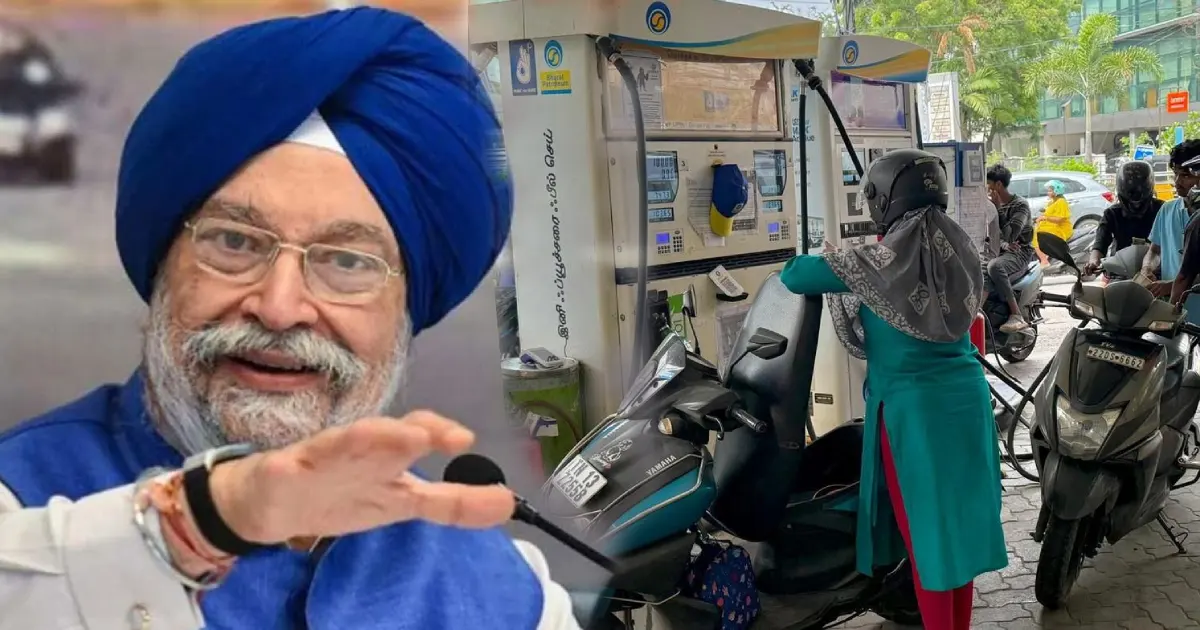
Addressing a press conference in Sonbhadra, Uttar Pradesh, over the weekend, Puri explained the current pricing mechanism. He stated that oil marketing companies are currently processing crude oil procured earlier at higher rates. Consequently, the benefits of softer international crude prices have not yet trickled down to retail fuel stations.
Why the Delay in Price Cuts?
“At present, companies have stocks of crude oil bought at higher prices. When crude purchased at lower prices reaches them, there is a possibility of a reduction in fuel prices,” the minister said. This clarifies why pump prices remain elevated despite a drop in global crude benchmarks.
Read More: SpaceX Joins Top 6 Largest Global Companies by Market Cap
Currently, petrol is retailing at Rs 102.12 per litre in New Delhi and Rs 113.51 in Kolkata, while diesel stands at Rs 95.20 and Rs 99.82 in the respective cities. Any reduction would bring immediate relief to the logistics sector and daily commuters.
Shielding Consumers from Global Volatility
Defending the government’s broader pricing strategy, Puri maintained that India has successfully navigated severe disruptions in global energy markets. He pointed to geopolitical tensions, particularly the ongoing conflict in the Middle East and uncertainty around the Strait of Hormuz, which recently pushed global crude oil prices near the $100 per barrel mark.
Despite these global headwinds, Puri claimed that out of 193 countries in the United Nations, only Japan has recorded a lower percentage increase in petroleum prices than India over the past two years.
Read More: Salesforce Lays Off 86 in Third Round in 9 Months, Hits Agentforce AI and MuleSoft Teams
“If we look at the situation in real terms, there has been no effective increase in petrol and diesel prices in the country compared to the levels during the Russia-Ukraine conflict in 2022,” he added.
The Excise Duty Factor
The minister highlighted that the Narendra Modi government reduced central excise duties in November 2021, May 2022, and again recently to cushion the blow for consumers. These tax cuts resulted in the Centre absorbing a revenue burden of approximately Rs 10 per litre on both petrol and diesel.
Puri also noted that oil marketing companies have frequently absorbed substantial losses, often running into hundreds of crores daily during peak crude spikes, to ensure the full impact of volatile global markets is not passed on to the common man.
What Happens Next
While the minister’s statement offers a positive outlook, the actual timeline for a price drop remains tied to inventory cycles. Market analysts suggest that if the geopolitical situation in the Gulf region remains stable and global crude prices stay moderate, consumers could see a revision in retail fuel prices in the coming weeks.